WHO WE ARE – The Mr Henry Institute (MHI) is an independent thinktank whose aims and purposes are manifold.
HOW WE STARTED – The Institute was founded by the late old Mr Henry sometime last century. He was a homo universalis and Renaissance man in the mould of a Da Vinci and hampered only by the fact that he lived on the New South Wales Central Coast in the twentieth century.
In his notebooks, old Mr Henry often comments on the depressing meatheads, who, even in his day apparently, populated the Coast.
During his long life, old Mr Henry made significant contributions to science and humanities alike. His inventions are too numerous to list here, but let’s say that, despite Da Vinci having a head start measured in centuries on him, old Mr Henry gave him a run for his ducats.
Called a hoarder by the ignorant (council workers, social workers and the NSW Fire Brigade), he was an active but selective collector of a great many things. And he knew where everything was, where in the house, where in which allegedly illegally erected shed and where under which allegedly planning-approval-less lean-to.
Alas, even the greatest of lives must end at some point.
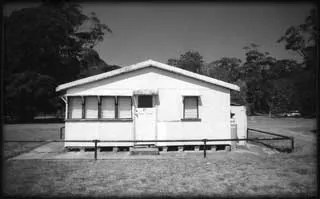
It was a during a particularly ferocious summer that old Mr Henry died while taking a cooling bath in his simple Central Coast fibro cottage (no insulation of any kind, let alone air-conditioning) that not only housed him and his fiercely protective Alsatian dog Dieter but also the Institute itself.
The heat was stultifying in the high thirties, the relative humidity in the upper nineties. A massive stroke killed him. His death went unnoticed for a week, during which heat and humidity continued unabated.
When police finally carried out what is nowadays called a welfare check, going in through the unlocked back door, old Mr Henry’s remains were no longer readily identifiable as his. A device, a sieve not to put too fine a point on it, had to be used as part of the retrieval process.
Today of course, the Mr Henry Institute is no longer housed in that original fibro cottage where old Mr Henry did the Institute’s first important thinking. After occupying a successive number of rented offices, invariably above charcoal chicken take-away shops it seems, the Institute relocated to premises in an area zoned light industrial, still on the NSW Central Coast, where a purpose-built facility arose in between a garden supplies business (Central Coast Garden Supplies) and a repair workshop for car radiators (Central Coast Radiators).
In memory of old Mr Henry and as a memento mori to us all, the original bathtub in which old Mr Henry met his Maker has been given pride of place on the Institute’s front lawn, on a patch of white pebbles and with an explanatory commemorative plaque. The far side of the tub has been slightly elevated, so that passing motorists can peer into the tub itself from the road without leaving their vehicle.
Next to the tub and looking up, stands a life-size replica in poured concrete of a visibly fierce and growling Dieter, old Mr Henry’s faithful Alsatian, shot by police as they entered to carry out their welfare check.
HOW WE ARE FUNDED – The Mr Henry Institute is an independent thinktank, unlike so many, or rather all other, thinktanks these days, or thinktanks since time immemorial, really.
We at the Institute believe that he who pays the piper calls the tune. For that reason, the Institute is proud to have maintained its financial self-sufficiency from the very beginning, in the dear old fibro cottage. We pay the piper, we call the tune. We often also play it, because no one else will.
Old Mr Henry started this proud tradition sometime last century, we continue it just as proudly in the current, but with rather more money now, and it’s all down to Mr Ping. Let me explain.
The sympathetic and energetic University of Shanghai educated Certified Practising Accountant Mr Ping Li-Ping M Bus Sh CPA is the Institute’s Chief Financial Officer. Mr Ping is a versatile and creative executive and not at all what you would expect from a Certified Practising Accountant, or any accountant really. Apart from payroll etcetera, he also looks after fundraising, marketing and business development.
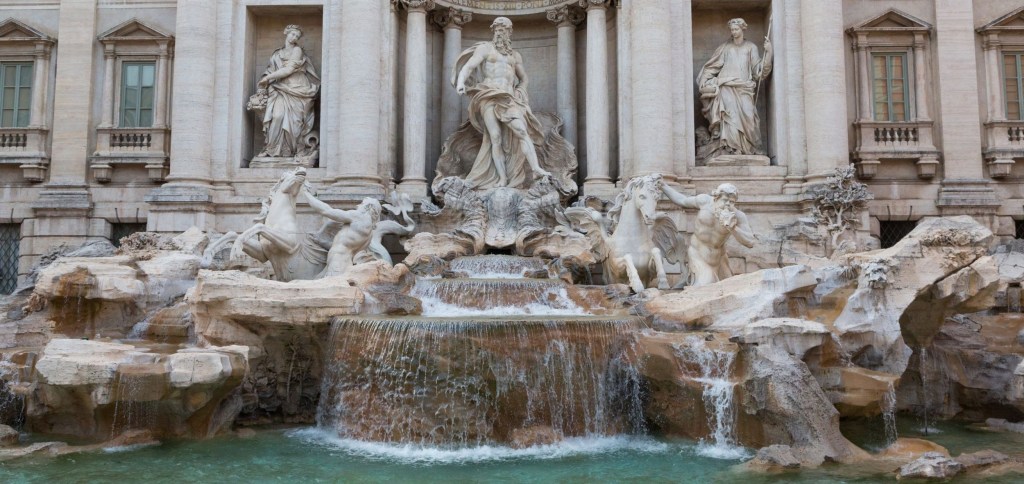
When he commenced his tenure as the Institute’s Chief Financial Officer, Mr Ping made it his business to read all available Institute publications, among which he singled out as his favourite Where’s a Swiss Guard when you need one?, one of number of reports of factfinding missions undertaken by Institute members, in this case a field study in Italy, which Mrs Henry and myself undertook on the Institute’s behalf in 2018. This particular report looked at, among other things, the Trevi Fountain and made two points about that tourist attraction.
First, the report noted that the Trevi Fountain’s statuary component resembled to a tee the statuary section of the Central Coast Garden Supplies outlet next door to the Institute. When I say to a tee, I mean that it was totally different but in essence the same.
Second, the report noted that, notwithstanding the staggering amounts of cash deposited in the Trevi Fountain, security was extremely lax. Why, the report asked, was it down to overworked Roman police to keep tourists from scooping out cash when they, the police, had so much else to deal with and when at the same time a workforce of Swiss Guards was sitting idle in nearby Vatican City, many of its recruits probably ceding to amatory advances by elderly cardinals? I may have left the last bit out of the 2018 report itself, but you get my drift.
Mr Ping’s response was remarkable.
Before I tell you what that response was, I need to fill you in on how the Institute moved from a series of rented office premises to its present-day purpose-built facility in an area zoned light-industrial.
The site was left to the Institute by a long-time supporter and donor who operated a car wrecking business on it (Carlo’s Central Coast Wrecker’s – Car’s Bought for Cash, All Makes and Model’s). Although Carlo wasn’t exactly a Renaissance man himself – note the abundance of greengrocer’s apostrophes in the name of, and sign for, his business, for example -, his grandfather and old Mr Henry were members of the Central Coast Branch of the now defunct Australian Anarcho-Syndicalist Party. They were close mates. Old Mr Henry helped Carlo with his homework, and Carlo when he died, being the last in the family line, not only left the Institute the site but also a finished, ready-to-go development application and enough money to construct the steel-framed multi-storey office building in classic Style Côte Centrale, which the Institute now occupies.
So far so good, but, as Mr Ping remarked, the building was quite empty, accommodating just three workers: Mr Ping, Mrs Henry and myself. Our response to Mr Ping was that we expected to rent out most of the office space and in that way not only use the office space but also generate recurrent income to hire more policy and research staff.
It was at this point that Mr Ping suggested that the Institute should buy Central Coast Garden Supplies next door, land and ailing business, and convert the statuary stock, which did not seem to sell very fast or at all, into a Trevi Fountain, with coasties and tourists alike able to toss cash into it and make a wish.
Mr Ping also knew just the man, a cousin, to supply a suitable fibreglass reservoir and an approximate fibreglass replica (reduced in size to scale) of the Palazzo Poli. I don’t need to explain to visitors to this website that the Palazzo Poli forms the backdrop to the Trevi Fountain, which itself is a mere toddlers’ pool really. It’s the Palazzo Poli that makes the Trevi Fountain!
An altogether brilliant idea of Mr Ping’s, all credit to him, although his idea is of course based on observations of mine back in 2018.
Today, the Henry/Trevi Fountain Number One (Mr Ping is scouting struggling garden supply businesses in Melbourne and Brisbane, or anywhere on Australia’s eastern seaboard really) is bringing in huge revenue, not just from locals and day trippers from Sydney and Newcastle making a wish but also from stallholders at the all-week 24/7 produce and crafts market at the back of the Palazzo Poli’s fibreglass facade and from the Institute’s gift shop, where the Original Old Mr Henry Bath Salts (for mum and dad) are a big seller, as are the sealed plastic sachets containing genuine old Mr Henry relics (for kids 8 – 12).
Security at the Henry/Trevi Fountain is in the hands of …. Swiss Guards! Not real ones, obviously, but Mr Ping has brought in numerous relatives of his on B747 visas, or whatever these things are called. Admittedly, the Institute’s Swiss Guards don’t look very Swiss. They are not tall. They don’t have blue eyes. They are Swiss Guards with Chinese characteristics, you might say, but they still are spiffy and threatening with their fibreglass morian helmets and halberds and in their authentic uniforms sown together by a relative of Mr Ping’s who does clothing alterations for a living from a shop at a nearby Westfield’s.
Everyone wants to take selfies with Mr Ping’s Chinese Swiss Guards. And to top it off, on old Mr Henry’s birthday two Swiss Guards stand guard in front of the Institute’s offices at the old bath tub rescued from the old fibro cottage where it all started. A very special day!
The old fibro cottage has, of course, been pulled down and replaced with a McMansion. A young family lives there now, unaware of the greatness which preceded their tenancy.
