The Pilgrims are still fighting each other. After a dash north-eastfrom Virginia, we’re in Massachusetts: Boston, Plymouth and Provincetown.
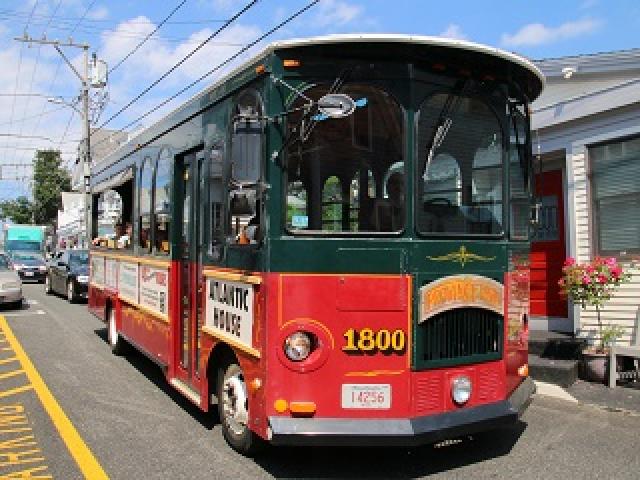
Getting to the 360-degree viewing platform (two levels), at the very tip of Provincetown, Massachusetts was quite a task. Sand dunes all look alike, so that the Egg, trusty V8 thrumming, kept arriving at the same, unwanted sandy, dead end along bitumen paths that all looked different, but weren’t. Until, that is, Mrs Henry spotted a trolley car, a phenomenon largely unknown in Australia.
Any self-respecting American town with the vaguest link to anything historical seems to have struck a deal with a nefarious firm called Gray Lines to run guided tours on wheels. A trolley car is basically a bus designed to look like a tram according to the strictest ye olde-fashioned antiques shoppe principles.
Mrs Henry and I didn’t know that Provincetown was the sort of town that stretched to a trolley car operation, but it obviously did. What we also didn’t know was that Provincetown has historical claims, hotly disputed by the nearby town of Plymouth, which has the same claims, hotly disputed by Provincetown, relating to the arrival of the English Pilgrims almost 400 years ago. Plymouth has a rock on which the Pilgrims allegedly stepped as they alighted from the Mayflower. Provincetown has a granite column (admission US$7.50) to commemorate that they allegedly alighted in Provincetown, no rock being specified by column management.
Mrs Henry admirably summarised the issue: “Who gives a stuff? They got here, didn’t they?”
Mrs Henry and myself have boarded a few trolley cars during our stay in the USA. New York City, of course, had double-decker buses, but all our other guided tours have been facilitated through hop-on hop-off trolley cars.
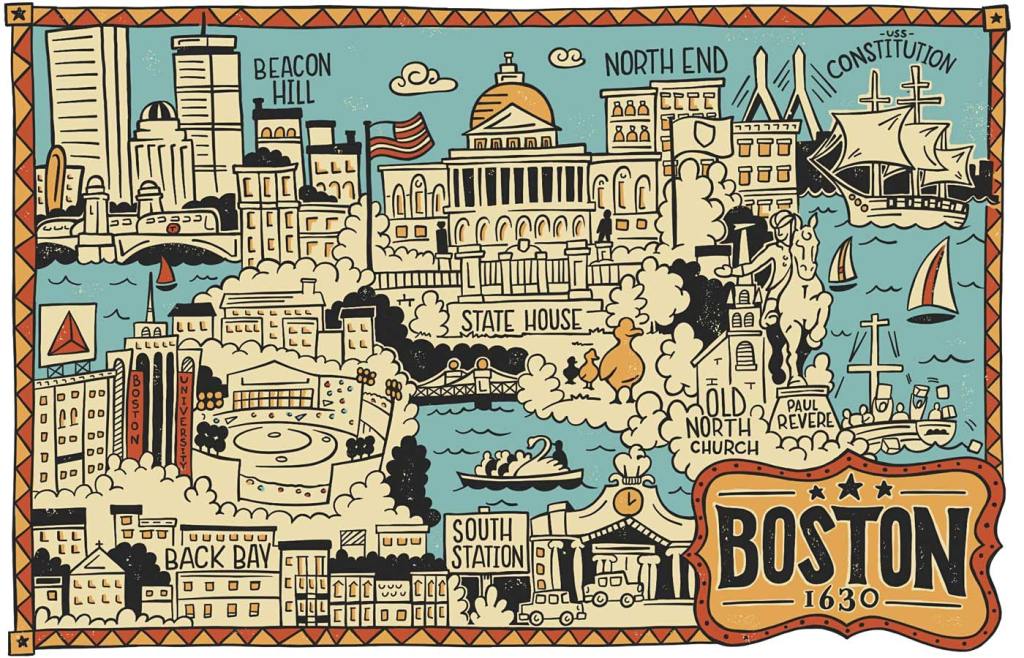
Boston, our stop before Provincetown, ran to three different trolley car operations. It was capitalism at its best but confused the hell out of a group of Florida retirees.
“Key-ant they just have one?”, complained a Floridan to Mrs Henry, “Which one are you going on?”
Mrs Henry showed the hand-out of the company we had selected, or rather, the company that got to us first, because Mrs Henry reasons that they must be the keenest and given that the tourist sights and therefore the routes don’t vary from company to company, what’s the point in agonising.
“Do you think they’re bedder? Why do you think they’re bedder? What if they’re not bedder?”, agonised the Floridan.
We left him to his agony.
Mrs Henry’s trolley car selection process proved to be spot-on. We got a driver-cum-tour guide who discouraged us from getting off at the stop for the Museum of Contemporary Art, which he had checked out for us.
“I said to the curator, a collage? What sort of collage is this? Can I send my kid to this collage? How much does it cost to send my kid to this collage?”
We drove past the Fenway Park stadium, home of the Boston Red Sox, who would win the 2013 Baseball World Series, i.e., the local comp.
“Never go to a game there”, he advised. “Watch the game on TV. The Stadium is very uncomfortable. The seats are made of steel and oak.”
Heart-warming negativity in the land where everybody wishes everybody a “nice day” about a thousand times a day.
Fenway Park, by the way, is made out of the same kind of steel beams, and even painted in the same light green colour, as the two-mile long multi-decker Tobin Bridge, and my theory is that Fenway Park was constructed out of leftovers from the Tobin Bridge project.
Either that, or there is a law in Massachusetts that requires structural steel to be painted light green, who knows what madness the authorities there are capable of, because wait until you hear the story about the snowplough.
As always on these trolley car tours, you forget the important information, the stats, the who’s who of local history. What sticks in the mind is the inconsequential story, in this case the story of the snowplough.
In Boston the rich pay megabucks for parking spaces, located in the lanes behind the city’s antique four- or five storey townhouses, now all converted into apartments and studios. The ‘city’, we would say ‘council’, puts snowploughs through these laneways, which throws all the ploughed snow onto the parked cars.
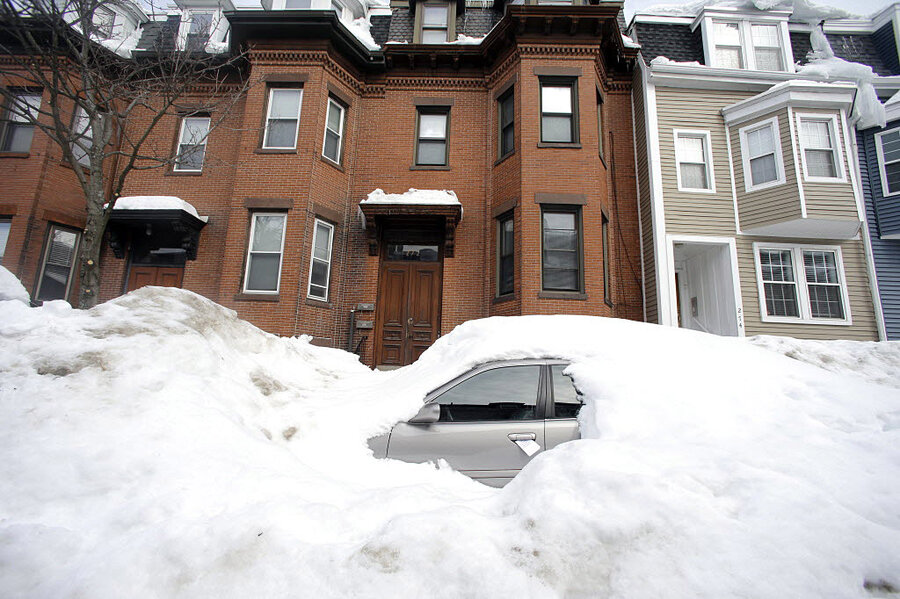
It’s an exercise in futility, because these lanes are only used by cars that are already parked there or want to park there. The ploughing actually does not improve accessibility, nor mobility.
Any car owner who digs their car out has to throw the snow onto cars parked nearby. This is illegal (even though the “city” uses the exact same practice when clearing the lane of snow) and punishable by huge fines. So anyone wishing to use their car has to get a company in to remove the snow burying their car from the lane altogether.
If I lived in Boston, I would be unlikely to have a car and even more unlikely, if I did have a car, to have a parking spot in a lane behind a multi-million dollar townhouse. But I am as outraged as I am unaffected.
Back to the beginning of this post.
“Follow that trolley car!”, Mrs Henry yelled, and that got us to the Provincetown viewing platform, where we duly viewed, both from both the lower and the upper deck, the Atlantic Ocean, which did not look different from either vantage point.
“On a key-lear day, you key-anne see Bah-ston from here”, claimed the same Florida retiree who we had left agonising about trolley car companies, now wearing a sailor’s cap. He was pointing due east.
The day was clear, and Boston was invisible to the north-west.
