Mount Rushmore, South Dakota, Anasazi cliff dwellings in Manitou Springs, Colorado, and Fort Union, New Mexico. Egg holding up for now.
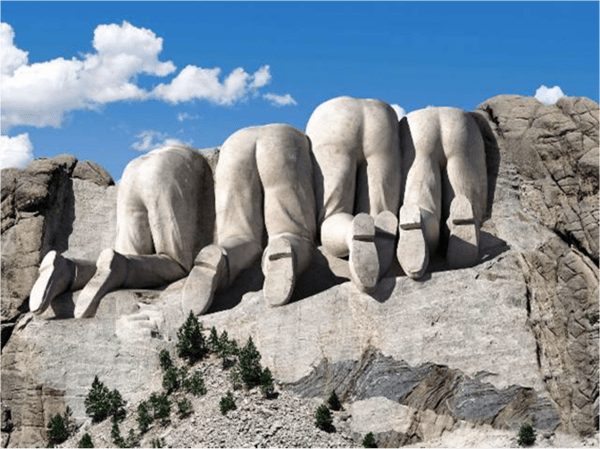
Mount Rushmore is an underwhelming monument. You come upon it suddenly. Is that all there is?, you think. It must be the angle, you think. So, you view the thing from every possible angle, but this monument looks like a replica of itself as sold in gift shops.
The Mount Rushmore monument was, in fact, created expressly as a tourist attraction, but that is not the only reason Washington, Jefferson, Roosevelt and Lincoln should be dynamited like the Buddhas of Bamiyan. (Where’s the Taliban when you need them?)
Mount Rushmore had and has religious meaning to the Indians, and crassly sculpting the heads of four Potusses into its rock-face surely is a crime in need of correction. In Australia, Aboriginal people rightly get shirty when you walk to the top of Uluru or call it Ayer’s Rock. Imagine hacking into Uluru the heads of four notable Australian Prime Ministers, say, Edward Barton, Robert Menzies, Kevin Rudd 1 and Kevin Rudd 2, on a scale of 100:1.
Another of the USA’s not to be missed attractions are the cliff dwellings of the Anasazi in Manitou Springs, Colorado. The Anasazi lived there in the twelfth and thirteenth centuries, but the first dwellings were actually not built until the late nineteenth century and expanded in the twentieth. Most European capitals feature functioning quarters older than the cliff dwellings of the Anasazi. “Until 1984, local native American Indians actually lived in these rooms”, boasts the brochure. Then they moved to the burbs.
The dwellings are tiny, although described as accommodating a family of four. It’s hard to believe that they did. The gift shop certainly occupied an area far greater than an individual cliff dwelling accommodating four, with many ‘gifts’ and ‘souvenirs’ turning out to have been made in China.
A bit further south, in New Mexico, stands Fort Union, without which the Santa Fe Trail and the settlement of New Mexico and the protection of the Californian goldfields could not have been achieved. Fort Union became obsolete in the late nineteenth century with the advent of the railway and was … abandoned.
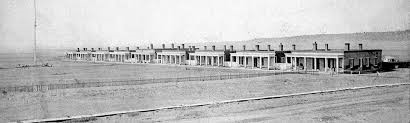
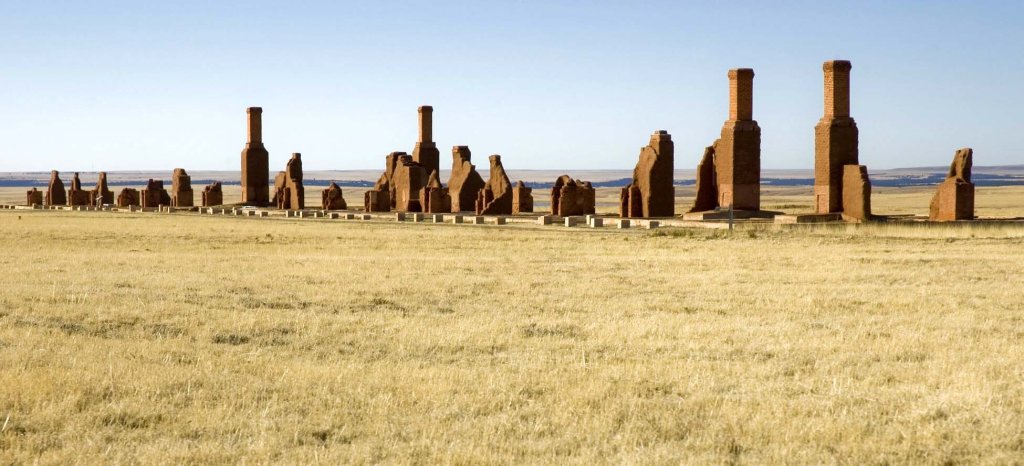
What remains today are its foundations, a few fireplaces and sections of wall. What a missed opportunity! A sturdily built fort of vital strategic importance in the development of the USA lies irrecoverably in ruins less than two centuries after it was built. Two millennia you could understand, but two centuries is careless.
Yes, the USA is desperately short of intact historical buildings, not just a hill with a little plaque that says that so-and-so fought so-and-so here 150 years ago; not poncy neo-classical statues, but real tangible, weathered, intact buildings that bring the past to life. In the absence of any, America is best enjoyed by car and viewed from a car.
It’s a drive-through country. Its true monuments are its landscapes.
