A visit to the Auschwitz/Birkenau concentration camps.
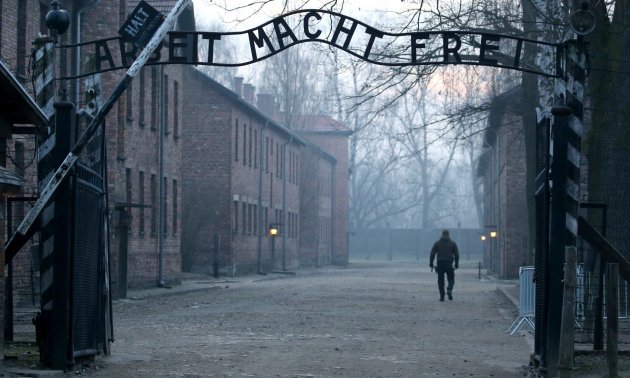
“Isn’t the transport between Auschwitz and Birkenau just magic!”, I think to myself.
A bendy bus is used as a shuttle between Auschwitz and Birkenau, a three-kilometre run. Once visitors have completed a guided tour of Auschwitz, they are moved to Birkenau by bendy bus.
The rusty final stretch of tracks leading to Birkenau can be seen from the shuttle. The transport connection was magic at the time, too, courtesy of Adolf Eichmann.
Birkenau, built because Auschwitz, a former Polish army base located in a built-up area, was at capacity, received all transports from all over Europe. Most women and children were murdered on arrival as well as the men deemed too weak to work. There is a heart-breaking display of thousands of toddlers’ shoes heaped together in one of the Auschwitz barracks.
Those able to work were intentionally worked to death or to the point of inability to work, which meant being murdered.
Smallness is what is striking about Auschwitz. The SS put a double ring of electrified barbed wire around it, constructed watchtowers and there you had your concentration camp, its perimeter no longer than an evening stroll.
The buildings making up the camp are of weathered brick and not unattractive.
Birkenau is a vast paddock with barracks neatly spaced out, about half no longer standing apart from their chimneys, while the brick barracks are on the brink of collapse and are supported and braced. At the far end of the camp, the two massive gas chambers cum crematoria lie in ruins, dynamited by the Nazis in 1945.
It still looks like a paddock, though.
This is the thing. What happened at Auschwitz and Birkenau cannot be comprehended even when you’re there.
When the bendy bus delivers me back to Auschwitz after I have tried all day to understand, I buy myself a double-chocolate ice cream at the kiosk.
